
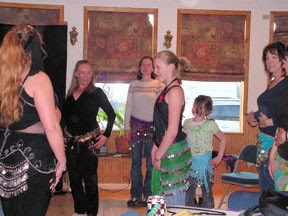
 This blog might have dealt with persistence. Sigh. However, after an evening in Tonasket at the annual Community Center’s Girl’s Night Out, thank you Suzanne, this idea of story awoke me this morning. Maybe it was Lindy, a wonderful poet, who edged me in this direction with her stunningly tactile quilt of a poem. Perhaps it was the exuberant time spent with two student dancers or the carafe of sangria we shared afterward. Or it might have been the experience of dancing for the first time since shoulder surgery. Okay, dancing might not give you the complete picture, for my shoulder limited me somewhat. But this body knows how to isolate muscles and break a move in equal parts to Pussycat Girls’ Buttons or Elissa’s Tloud Temana.
Which brings me to what, how and why I write. Also the what, how, and why we all may share a passion for what we do. What makes a story, chorography, painting or even a gathering of friends ring true? I believe it’s a matter of maintaining linkage to our vital essence.
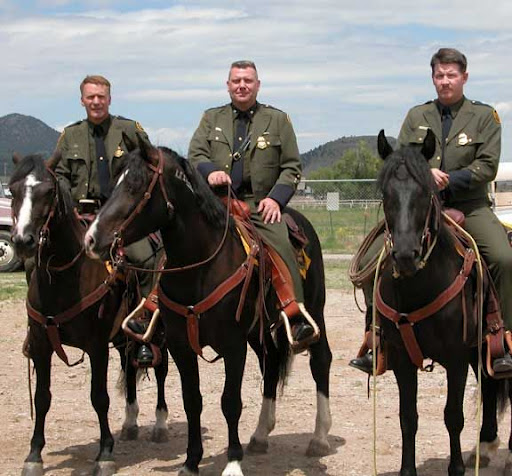 A recent opportunity to meet-and-greet mustangs serving our local border patrol presented itself. Captured wild and gentled by Colorado Corrections inmates, these bold animals appear to be perfect for their endeavors. Who taught who more–horse or inmate–before being integrated into the fold of this rugged Border Patrol station poses an inspired question. Surefooted, brawny, intelligent, they’re still enough mustang to stand against grounded cougar or foul malefactor and even stomp a rattler mid-strike. In other words, they retain their horsey essence–their wild being. For that we can thank the humans who chose to shape rather than break. Both wrangler and riders recognized the importance of maintaining their mustang’s nature even as they partnered with them for the rugged terrain in which we live. This is not a trivial matter, since each depends upon the other for life.
As when confronted the extermination of wild mustangs during my child- and young adulthood in Nevada, when reading accounts of stories, both long and short, that have been through a purported gazillion editing cycles, a part of me recoils. Another part longs to read the story, which is often what happens. Here’s my take.
Some stories survive the process of editing to become better, while others wither from the writer’s imposition of will. The latter lose their spark. Those of you who write with equal parts persistence, joy and heartbreak know what this means. On of my BGFs met the heartbreak of this headlong. She took an award-winning Scottish historical romance, then proceeded to break its spirit in hopes of crafting a bestseller. She was young in the art of the edit then and has since cultivated a more deft hand. Stories from short to novel to series in length have met the same fate. Obviously, these have been published, but they’ve been edited to the point of schlock. Schlock for me means that after reading the story, often with vast tracts of skimming, it will never ever be a keeper on my limited shelf space. Instead, it will go back to library or be found in a Friends of the Library sale. Often that author will never again grace the endless list of books I want to and do read.
 Then there are the keepers. My friend Susan Wiggs wrote one that brought out the clichéd response in me–I laughed, I cried, I rooted for the protagonist and threw virtual rotten tomatoes at the antagonist. This was her novel JUST BREATHE. I felt the same about George R. R. Martin’s first few novels of his SONG OF ICE AND FIRE series, which since has shifted from fantasy masterwork to perhaps simply lost and unfinished. Sigh. Another friend and writer Anjali Banerjee writes young adult novels with a beating heart–stories that deal with ISSUES, yet remain true to story. Her first was LOOKING FOR BAPU and her latest SEAGLASS SUMMER. She edits, bends, spindles and mutilates herself over the process, which as her friend I wish she’d simply trust, but ends with these beautiful stories with essence intact.
Which brings me to my stories. Two have been beautifully published on a small scale, found a tiny, but growing readership, and continue to haunt me. For you see, Susan and Anjali have become well-published authors with a vast readership. Sigh–again. Granted, an infinitesimal distribution and zero public relations combined with living in a sparsely populated county with one struggling indie bookstore has been problematic. However, if my stories had sold to a large publishing house, would that have made a difference?
 Perhaps. WILDFIRE and CALLING DOWN THE WIND, award-winners that they are, might have reached a wider audience, found more of those who love them, then been touted to their friends. I’ve done the same for stories I love. Yet here’s the problem. Four, possibly five of my novels loosely fit into either what’s called contemporary fantasy, magic realism, speculative fiction or urban fantasy, although really four of the five are actually rural or ex-urban fantasy. Large publishers refuse to fully embrace any of these categories. Just look at the well-established Alice Hoffman’s lovely novels, that bounce from literary to fantasy dependent on the bookstore or marketer. Of course, there is my homeless high fantasy trilogy that’s too big to take on with an ‘untried’ writer. Why can’t too big to fail work in this case? Sigh.
But I stray into rant and really, here’s the gist. My editing, like my dance, taps into the feral side. No, I’m not talking lizard brain, but the part of me that disdains being overly civilized. As an editor, I’m ruthless about craft, but mostly true to self when it comes to essence. How else could I have worked in male-dominated fields without losing my edge species element that takes ultimate joy in raqs beladi? This side mourned the loss of dogness in my retired runner greyts, then slowly and surely brought them back into touch with their essential dog nature. This part of me revels in my tuxedo cat’s inability to be wholly tamed.
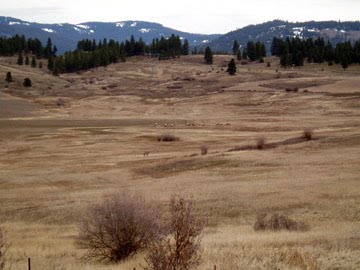
This landscape in which we live embraces the wild as much as my writing. Yes, I grow annual vegetable and fruit by the square foot, but only in response to predatory deer who would leave me nothing. Elsewhere, it’s drought- and deer-resistant plantings that follow the curves of the land and find homes where they’re most likely to take root and thrive. Drip system all the way…
 So why try to form story into cubes that fit the perfect square systems that our current publishing world clasps to their collective chest in a death grip, which indeed may turn out to be the death of them? I can count on one hand the books I’ve purchased as keepers in the last year. This from a voracious and careless reader.
Thus my conundrum. From the onset of writing a draft to publishing, where do we draw the line at editing for publication? Well, my answer changes dependent upon the compelling inner essence of each story. For now, only the beating heart, the coursing blood, the heightened sense of story lures me to the keyboard. I’ll keep you posted on how that goes and hope you’ll share your insights with me. Sigh.


 Janine Donoho