The Good Day by Janine M. Donoho

Sharing my month long stay in Malaysia has been my intent for this blog, however… I came home to an oddly incoherent email from my longtime friend and mentor, Darlene. In this short message, sent midway through my trip, she stated that she had finished chemo and radiation for stage 4 cancer. As it turns out, her lung cancer diagnosis began six months earlier with a ‘sore’ arm for which her then doctor offered aspirin and a pat on the head. A month later, Dar finally went to a doctor who listened, who placed a hand on the exact place where her arm hurt and who diagnosed the pain as a spontaneous break – tumor related. Probably cancer. This is how a world collapses.

Dar and I first met when I was in test engineering. She served with the secretarial pool that glued the engineering office together. We clicked. Her dry sense of humor and attention to detail carried us along with another writer into starting the Peninsula Chapter of RWA (Romance Writers of America), a now highly successful group with a growing alumni of published writers. I served with her as conference coordinator for the colossal RWA conference in New Orleans in the early 90s. We played at smaller conferences, meeting between events for the odd breakfast and lunch. She never lost faith in my writing ability, even as she misplaced her belief in herself as a publishable writer. She and Lloyd moved to Union in Mason County after he retired, yet we continued to connect. Once I moved to the Okanogan and published, I dropped her a line to let her know whenever I had an author event in the Kitsap area. She never came out to play, blaming her diminished hearing or dislike of driving for not making the events. I simply chose not to drive another couple of hours to and from Union for a meet up. Still, we have our history.

That’s why despite having just unpacked after an excruciatingly long return trip, I called another friend for a place to stay before throwing necessities into my recently emptied backpack. For this trip, the VW carried me seven hours to my destination in Kitsap County. From there a daily commute of an hour each way took me for a visit with Dar in her rehab and nursing facility in Mason County. One day the sky opened up and sheeted the road with what felt like tears from great gulping sobs.
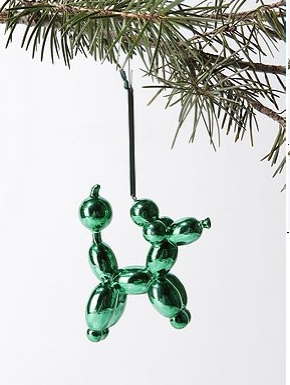
She felt too weak to talk much, so first I filled the silence with babble. Then I offered laptop photos of the recent trip along with those from our Okanogan home. This proved too much for her concentration. She slept often, waking to watch court television. Whenever she felt like it, I rubbed her legs, arm, neck and shoulders with an aromatic lotion, then massaged her scalp. Her meals consisted of barely touched white and brown foods intended to digest easily and help patients regain strength, if only to galvanize them to hunt-and-gather for more palatable fare. I brought her offerings of Ben & Jerry’s, pomegranate seeds smothered in dark chocolate, thick clam chowders and whatever else struck her fancy. She barely touched those either. In three day, she moved once from her bed to her chair and back again. My last day, she claimed to have been thrown into the shower by the staff, yet seemed perkier for it. To her room’s impersonal trappings, I added a bowl of bath salts interspersed with tiny shells smelling of the sea she loves and a palm-sized balloon dog of substantial Kelly green glass. Then I headed for Wenatchee to make a doctor’s appointment scheduled 6 months earlier.

Her daughter Terrea’s marrying on May 21st, which coincides with our family’s wedding in Spokane. Once home, I rifled through catalogs for possible mother-of-the-bride choices in the softest fabrics with the bohemian designs Darlene favors. You see, Dar has lost weight she will never gain back. At another time in her life she’d be blissful. Not now. Rather she insists on waiting for a better day to do those things that are important to her. She’s waiting for a good day to talk with her husband of 38 years, to communicate with her children. To talk with her friends. She’s waiting for a day that may not come.

So. Do we wait for those ‘good days’? Or do we surrender to this moment and accept each one as the gift it is? I told her I love her and reminded her of all the ways she has enriched my life. And now, for me, today is a good day. This is a great moment.

Tripping I by Janine M. Donoho

I’m going away, I cannot stay, I’m leaving my true love today…’ These words came from a singing round that recalls long bus rides and deep friendships. They also carry with them the excitement and joy of seeing new places and experiencing life outside the box. Which is why when my friend YingYing Lim invited me to travel to Malaysia this year, I jumped at the chance. Okay, jumped wouldn’t be entirely correct. In truth, I counted my rupees and knew, knew that no way could I afford this trip. At the same time, I also knew I could not afford emotionally and mentally to miss this chance. Thus, I’m paying the exorbitant fee airlines charge for 38 hours of transit and going.

My last long sojourn occurred five years ago and encompassed Egypt and Morocco with short stays in Paris and London both between and afterward. The actual Egyptian trip proved more difficult than any other treks before. Almost immediately, my travel partner became ill with a parasite. The places we stayed often challenged the body to recuperate from long jags with public transportation. Additionally, this Muslim-male dominated country tested me on personal issues that no other trip had done. For instance, should I have stayed out of the fray when a feral pack of young males beat and tormented a mother dog and her remaining pup? Probably. But I didn’t. My shock and sadness over how depleted Egypt’s historical wonders had become along with the continuing plundering made me realize I wasn’t interested in returning to this country again. I’ve never felt that way before. Plus, I tend toward being a communicator and many Muslim males simply refused to complete that necessary circle, even for simple questions. Over all, street anger was palpable. The day we flew out of Cairo, the first bombing of disembarking tourists occurred. Still, when I see where Egypt’s going now, I feel guardedly hopeful. In my mind, if the Egyptian musicians I love engage in this transition, Egypt could be fabulous.

 Morocco, our second leg of the same trip, was a completely different experience; full of joyful surprises and natural beauty. I felt that like Turkey, I could live there for a long while and enjoy exploring both history and country in more detail.

Next up–Malaysia with its predominately Malay population that calls itself 60% Islamic has called–and I’m answering. Of Chinese origin, YingYing’s primary family lives in Penang and Kuala Lumpur, while other family members live in nearby states and territories like Ipoh. Having visited and loved Singapore nearly 15 years ago, I’m looking forward to opening myself to this experience, too. Yes, I’m reading the requisite travel books by Lonely Planet, working on my polite Bahasa Malaysia phrases and tossing too many things into my backpack, soon to be distilled into essentials. The old version of ROUGH GUIDE SINGAPORE sits on my desk as does MOUSE CLUTCHING WINTER MELON (Loh Sin Kip Tong Kua) by Kuan Gnat Choo. It’s signed by the family friend to Mee Lian, YingYing’s stepmother, where we’ll be staying for a time. We’ll be hand-delivering this beloved tome to her.

Magical Thinking – Part II by Janine M. Donoho

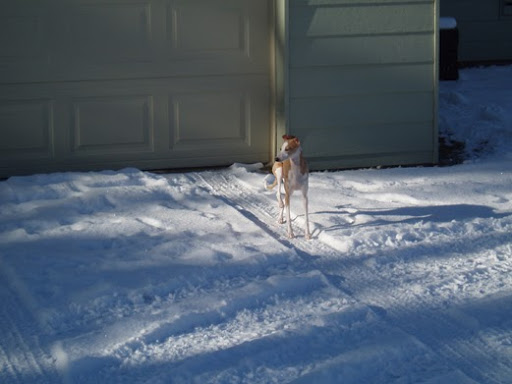
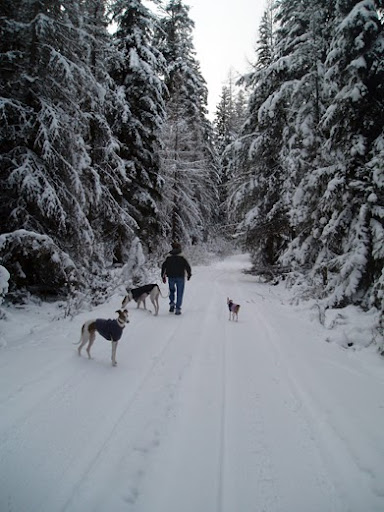
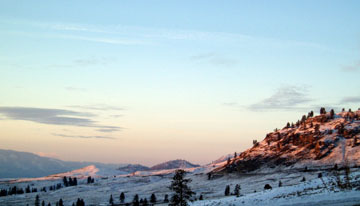
Nina Sophia’s 1st Snowfall – A New World

Don’t you simply love building your own worlds? Whether visual, oral or written, we yearn to create a place we can return to habitually. During the writing process, we must go into this world each and every day. Thus it must be a reality that causes a relentless itch while also satisfying us. As writers, we hope that readers feel the same. While this process comes across as somewhat magical in itself, my premise is that for our worlds to engage an audience, they need certain features. Foremost, you need to disengage your readers’ critics. That means seamlessly arranging an entire world of physical systems, societal taboos and mores, along with rules throughout the entire landscape.

In biology, an ability to see systems comes in handy. Skill in diagnosing a habitat for likely damage, and even failure, can mean the difference between actual life and death. Thus, you need your starting point. Chris Vogler likes to call this the ordinary world. My foundation in MISTBORN TRILOGY begins with a bucolic world without magic. Then, when the curtain between worlds rips open, wild magic invades like a viral attack. Ah, the call to adventure. Rather than revisit what others like Joseph Campbell and Vogler have done so well, let me focus on one aspect, which for me proves the most interesting. That would be the game of ‘what if’, which depends upon critical thought processes.
What if certain species and individuals are genetically sensitive to transformation with the influx? What if others cannot handle the change successfully, either mentally or biologically, as in a cancerous mutation. What if a person who understands the inherent linkage between science and magic, yet who had lost her capability to network, is trapped in this world. What if her abilities are suspect and worse yet, she cannot diagnose the world’s damage without cueing a rapacious predator as to her location. What if a master merchant, who sees himself as quite average and anything but heroic, suddenly finds himself a repository of the extraordinary.

You see how this ‘what if’ game gets played? For me, the play went on for over 1500 manuscript pages. Yes, a trilogy was born. Of course, this process works at every level of conception, including development of species’ physiology, cultures, and even entire universes of worlds juxtapositioned to each other with little to no awareness of the grander scheme. Oh, other than an entire species of beings that travel between, although mostly for scholarly reasons.

The same process goes into the best of other forms of fiction. The parameters for my contemporary fantasy CALLING DOWN THE WIND again started with a societal outsider. Yes, it’s a recurring theme. In this case, a young woman reaches puberty just as a genetic toggle switches ‘ON’. Rue becomes preternaturally connected to natural cycles and beings. Of course, she believes she’s going mental. Her reality issues from a potentially untrustworthy point-of-view. Yes, she’s a teen, yet readers believe in Rue and her journey. Why? Because the rules of her world work according to how she sees it. Then, as she gains confidence in her abilities, so do readers.
You see, we writers set the rules, then play within those parameters. Otherwise, our readers, who we adore, stop suspending their disbelief. Quite possibly, this leads to throwing our tomes across the room in fits of exasperation. As an abused reader, I learned this response firsthand. That experience also galvanized me to write, since I figured I could do this writing thing so much better. A-HEM and blush.

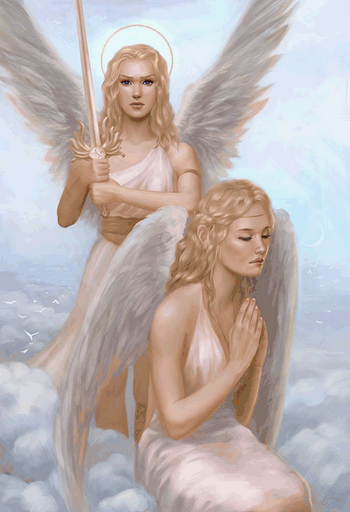
Another world around the corner. What if…

There are many books that have taken us into their worlds, shaped us, then kept us as return visitors. For me, Tolkien’s LORD OF THE RINGS, Guy Gavriel Kay’s FIONAVAR TAPESTRY, Orson Scott Card’s ENDER’S GAME, Anne McCaffrey’s DRAGONRIDERS OF PERN and Patricia McKillip’s RIDDLEMASTER OF HED served this grander purpose. First came fascinated appreciation for these stories along with a willingness to immerse self into them. Later, I returned to read them more critically. Even now, I lose myself in their mastery. Sigh.

Magical Thinking – Part I by Janine M. Donoho

No, this isn’t about Joan Didion’s touching year of madness after she lost both her life partner and child, although this blog may shine light on lesser misfortunes. Instead, it pertains to a mutant germ of magical thinking that has begun to permeate our culture. At least, that’s how I perceive the bizarre and perplexing sort of beliefs that encompass THE SECRET and other marketing devices of its ilk.


To begin, can we agree that magical thinking could equate with misapprehension? This subject’s tricky, considering anyone who creates also walks a fine line between imagination and madness. I mean, aren’t we somewhat delusional to believe that what we produce might resonate with another person? Perhaps. Maybe there’s comfort in the old political saw that if one person feels a certain way about an issue, there are at least 100 others who feel the same. That would be our herd. However, first we need to eliminate the possibility that we are actually lunatics. Not Nietzsche-style insanity, though. He did end his life locked away, after all. So, when we leave a room and close the door, the room’s still there and the same color as when we left. Okay?

 
Yet I know people who walk too fine a line, then cross over to inhabit the never, never land zone. As mentioned, THE SECRET touted such ‘magical thinking’ with the premise that you could wish what you want into being. When this was first presented on a nationwide broadcast of Oprah, I had this visual of humans everywhere lying in their beds thinking hard about mounds of cash, Lotuses and Lamborghinis in their 12-car garages, and a string of mansions from coast-to-coast. In other words, lots of stuff. Meanwhile, my brain’s screaming, “What about preparation? What about mastering your skills to make this happen?” A few months later, the gurus associated with this remarkable social phenomena issued another directive. You must prime yourself to receive this bounty via preparation, mastery of skills, etc. Whew! Bullet dodged.


Or not. Evidently, that message didn’t reach all the people who need to hear it. Thus in my neck of the woods, there are people who, due to lack of preparation, send chills down my spine and cause me to wake up panicked at 3 a.m. Yes, these are people I care about who have decided to accept the original premise. They see nothing wrong with lying on their backs staring at their ceilings…


Can I now add a caveat that just because we can’t perceive a thing does not mean it isn’t there? I mean, it’s only in recent years that science could effectively view a virus. And what about that crazy radiation–unseen but heard via telemetry. Okay, and yes, I have a special place in my heart for masses of fairy folk and others that crowd our world. And synchronicity–that I depend upon. After vast amounts of groundwork, that is.


Without mentioning names, there’s a woman who was diagnosed with ovarian cancer. Before that, she attended and held meetings of local faith healers, women who believed in variations of healing via prayer, thoughts, touch or almost touch. Again, just because we can’t see it doesn’t mean it isn’t there. However, when this woman, who is also a mother, learned of her diagnosis, the healers scattered to the four winds. She still speaks of this event with greater hurt and sadness than the actual cancer, which she treated and evidently eradicated through Western medicine. Yet she and the others had built this world in which healing occurred by other means. Until it didn’t.

Then I’m acquainted with a talented artist, shy as any woodland creature, who lives in a house so tiny that it’s beginning to find fame in today’s less-is-more culture. She creates visual art, then trucks it to farmers’ markets from late spring into mid fall in hopes of generating enough sales to get her through winter. In previous years, before this year-of-the-shoulder, my guy and I delivered loads of firewood to her woodstove-only place along with boxes of human and kitty foods along with other supplies. Her belief has cemented into the view that if she needs something, magically it will appear. In fact, this belief system dominates her life to the point that she refuses to take work-for-pay when it’s offered. Yet last time I saw her, her appearance shocked me. She’s too thin and has begun to lose teeth. Yet she still subscribes to this magical thinking that to me has become frighteningly delusional. I want her to accept a job, fix her teeth and actually pack her own chute. It worries me that we have enabled her illusion of reality. The thought of her causes me to awake in a panic on winter nights when even our 4-wheel Toyota can no longer reach her. What’s the option, though? Finding her frozen and starved body when the spring thaw arrives?

Stories of this kind of delusional thinking continue to grow. Perhaps it’s our tough economy that makes it feel so necessary to so many people. Perhaps it’s a general state of immaturity and unwillingness to accept reality and work to change our circumstances. Where’s critical thinking when you need it? Flabby and unused in the recesses of our brains perhaps? Let me say again that I believe preparation and hard work leads to synchronous occurrences that take me to the next level. I suppose that’s a belief system, too. What about you? Do you pack your own chute or wait for it to magically occur?
 

In part II, we’ll explore how to construct the necessary suspension of belief inherent in building magical worlds. Warning, it requires critical thinking.

Atrophy & Recovery – Part II by Janine M. Donoho

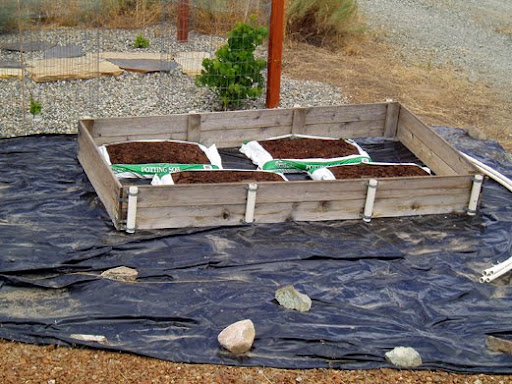
Last night during a nocturnal wander through the house, during wakefulness fueled by housetraining that adorably cute Italian Greyhound viewed in Part I, I noticed starlight bouncing off the black plastic laid for next year’s garden area. You see, this is one of the most passive and easy returns on preparing soil for new plantings.

Beneath the opaque cover, which soaks up late summer and autumn rays, then cooks the existing seed banks into submission, the organics formerly-known-as-weeds become fuel for astilbe, peonies, anchusa and other faves. Well, an equivalent to this is what happened during my crossover from tech writer with fictional aspirations into novelist. As promised, I’ll share the watershed events that led to this transition.


The equivalent of plastic mulch in my life at that time took me from writing about forced draft blowers, main feed pumps, lithium bromide plants and the ever cool condensers into first women’s fiction, then onto my latest rage of contemporary and high fantasy. Okay, admittedly, FDBs and MFPs can be wickedly geekish and even satisfying to write about, but world building’s way more fun.


Allow me to tout two books, which at that time helped me both mentally and emotionally into transition. Clarissa Pinkola Estes’ WOMEN WHO RUN WITH THE WOLVES and Julia Cameron’s ARTIST’S WAY provided both cure and inspiration for what ailed me. Let’s face it, Navalese-speak does not make for a bestselling author, although it does help with keeping to just-the-facts Jack.

Estes’ tome uncovered personal stories, often painful, that thwarted my instincts to probe into the depths and dark places. Then Cameron gave me permission to use those finds to go where story lives. Yes, I’d dabbled in poetry, fiction and playwriting before then, which had been somewhat successful. Let’s face it; a menu that includes twelve weeks of the equivalent of really good dark chocolate for the brain and spirit can take you so much further. Especially when led through the process by Estes and Cameron’s empathetic, yet grounded approaches to healing.
 

Since then, I’ve turned to other geographically remote mentors such as Stephen King’s ON WRITING, Carol Lloyd’s CREATING A LIFE WORTH LIVING, Susan Shaughnessy’s WALKING ON ALLIGATORS and FRUITFLESH by Gayle Brandeis. I’ve even returned to Julia Cameron, although her later works failed to spark the same cascade of light as ARTIST’S WAY, through no fault of hers. We artists are receptive at different times to different magnitudes of inspiration, after all.


So if you find that atrophy has set in and hope to recover not only your mojo, but go to a greater level of creativity and productivity, think in terms of mulching your creative beds for your next planting season.

As it happens, I plopped four bags of commercial soil onto my black mulch, cut the tops open, then planted each bag with cold crop vegetables such as arugula, Kweik organic lettuce, endive, pak choy and broccolini. Oh, and I threw a few seeds of Misato Rose radishes and boro beets in for good measure. Next year, that soil will be turned into what lies beneath to further enrich the soil. Yum.
 
So I encourage you, too, to turn to the sources that feed your soul and makes it fertile. It beats atrophy every time. And if a puppy helps you along your way, why not?

Atrophy & Recovery – Part I by Janine M. Donoho

As physical therapy continues as a mainstay in my life, on a daily basis I confront the vagaries of atrophy. You might have guessed that this isn’t a funhouse by Pink’s or anyone else’s standards. Awakening withered muscles hurts. Rebuilding muscle hurts. For the first time in my adult life, I cannot distinguish between muscle pain and joint pain, which when you’re recovering from multiple screws in the rotator cuff, can really mess with your composure.

Nonetheless, once a week I’m driven like Miss Daisy to a physical therapist who first calms both sane and absurd fears, then manipulates the joint beyond what I’m capable of doing myself. The therapist also assigns new exercises. I tell myself these remedial tricks are more than deceptive smoke-and-mirror pranks. Despite the first six month marathon of supposed ‘recovery’, this one’s imminent, isn’t it? I’m simply in the fireweed stage of renewal after a devastating forest fire, right? Yet without drama, I make weekly, even daily, gains. Nonetheless, there’s often been half a painkiller at about 3 a.m. along with 1-2 icepacks each night.


So what are the corollaries to this if you’ve allowed your writing muscle to deteriorate? For I find myself in that odd space, too. As a lifelong writer, this feels unexpectedly distressing. Also, kind of geekishly interesting. The last time I dealt with this loss of gravity came after years as a primarily technical writer in test engineering. At that time, I faced the blank sheet of fiction with trepidation much like the wasted shoulder.

Now for the fascinating part of this process. You see, at that time, mentors and nonfiction helped me through the there-be-dragons phase. Ultimately, this route turned a ‘what-to-do-with-a-blank-page’ quandary into a vast shift from one career to another. The specifics on how this happened? Well, you’ll learn more in part deux. For your edification and mine, enjoy these views of my summer garden and new puppy. I mean, who doesn’t love a puppy? Now, it’s time for another ice pack.Manny Kartouche' & Nina Sophia, puppy

On Relevance – Part II by Janine M. Donoho

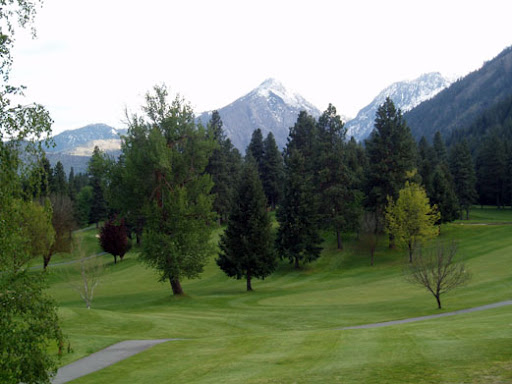
The view from our balcony in Leavenworth.
I had the opportunity to attend Write on the River in Wenatchee this May. Actually, my friend and critique partner Anjali Banerjee was a speaker, so we made it a girlfriend weekend of three that included best buddy and fellow writer Kate Breslin. Since Kate ended up coming a day late due to her spousal unit’s truly wretched bout of gastroenteritis, on Friday before the conference I assisted Anjali as she visited two schools. Incredible writer and presenter both, she gave four different and delightfully relatable programs for various elementary school grades. Introducing her, then juggling props, especially wrapping and unwrapping children in a stunning sari that belonged to her mother, I got a good taste of the peripheral nature of a sidekick. Yes, ‘relatable’ and ‘peripheral nature’ both refer to relevance.
 
Then on Sunday, opportunity again shone when Larry Brooks, who writes critically acclaimed thrillers, spoke passionately about The Six Core Competencies of Successful Storytelling. This offered another view of storytelling as espoused by Christopher Vogler’s “The Writer’s Journey” and more recently by Donald Maass’ “Writing the Breakout Novel”. However, Larry’s approach, soon to be followed by his book on the subject, clarified the process even further. One of the samples he gave for dissection was the movie Collateral, starring Tom Cruise and Jamie Fox. Dutiful student of the craft that I am, the movie arrived via NetFlix the following week. It delivered on all of Larry’s elements.
 
However, the shocker of the day arrived as an aside. Larry claimed that actual writing, that sublime weaving of words, comes in dead last when weighed against concept, theme, character, structure, scene execution and writing voice. Last.


Leavenworth goat–apropos of this writer’s journey.
As a writer enthralled with both the import and nuance of words, this served as a body blow. All the books on my shelves, also known as ‘keepers’, are well written. However, Larry’s notion does explain many of the big brands in publishing, some of whom no longer write their own novels. So to be relevant to publishers, the six core competencies are paramount, while beauty and specificity of your words rank much lower. Ouch.
 

Which means I need to review my stories for those competencies–again. Maybe you’ll want to do the same. Perhaps publishers will overlook that they’re also delivered with well-written language. We want to be relevant after all.

On Relevance – Part 1 by Janine M. Donoho

Okay, I’m struggling with relevance, which according to a random web definition relates to:
1. Pertinence to the matter at hand.

2. Applicability to social issues: a governmental policy lacking relevance.

3. The capability of a search engine or function to retrieve data appropriate to a user’s needs.
Evidently, humor seems inherent in this journey to find something like relevance. A black humor, in this case.
 
I’m back in the process of recovery–deja vu all over again. The frozen shoulder, unlike an annual thaw, did not simply wake up one morning revitalized into action. Instead, it required ‘medical intervention’. Read into this a nerve block and general anesthesia followed by manipulation that led to new holes in the shoulder and sawing away adhesions along with a repair to a blown bicep. Okay, the nerve block was geeky cool. My arm stayed totally asleep for 28 hours, during which time a tapping against my thigh  turned out to be my hand knocking against the leg. Oh, and I finally get the whole phantom limb thing my dad experienced. Still…
 
Remember the story of the woman who had a mouse infestation, so she got a cat to take care of the problem, which led to a need for dogs to deal with the cat problem…
 
So now at 3:30 am, after an ice pack and a pain killer, I’m deeply into questioning relevance. It’s A BIG ISSUE at this time of night. So let me shrink it to human scale first, then to being a writer in a world that seems to consider those who string words together less relevant than ever.
 
I’ve been at this writing thing for a while, my friends. Even as I write that word in plural, is it even germaine? For who reads this silly blog, after all. Yet as a reader first, I know two books that have been significant to me in this last month of deja vu recovery. The first is Kristen Hannah’s latest, WINTER GARDEN. The second? Guy Gavriel Kay’s UNDER HEAVEN, both of which make me question my ability, my vision, and yes, my relevance. Yes, they’re both wonderful. While this would be my usual cue to wax eloquently on the why of this, I just can’t right now.

Granted I haven’t been writing with any facility since December. Pain, drugs and loss of belief in self can do that to creativity. Frankly, my search engine’s gone awry. While I have four novels residing in my brain, why bother to put the time in the chair to bring them to fruition? Does the world need another of my evidently underwhelming works?
 
Instead, I’ve taken on a local job with a community school as programs manager. The relevance of that is to bring local creatives who have something to share into an environment where they can do so. Yet even here, this month of drugs and pain has limited my intention. There’s a catalog due to go out at the end of this month, yet I’m still in the ferret roundup stage of trying to get the creatives to commit. Ah, irony lives.
 
So, how to find relevance as a writer in this search engine world? More on this later.

My Bridge of Sighs by Janine M. Donoho

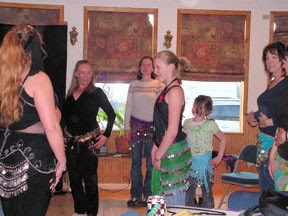
This blog might have dealt with persistence. Sigh. However, after an evening in Tonasket at the annual Community Center’s Girl’s Night Out, thank you Suzanne, this idea of story awoke me this morning. Maybe it was Lindy, a wonderful poet, who edged me in this direction with her stunningly tactile quilt of a poem. Perhaps it was the exuberant time spent with two student dancers or the carafe of sangria we shared afterward. Or it might have been the experience of dancing for the first time since shoulder surgery. Okay, dancing might not give you the complete picture, for my shoulder limited me somewhat. But this body knows how to isolate muscles and break a move in equal parts to Pussycat Girls’ Buttons or Elissa’s Tloud Temana.
 
Which brings me to what, how and why I write. Also the what, how, and why we all may share a passion for what we do. What makes a story, chorography, painting or even a gathering of friends ring true? I believe it’s a matter of maintaining linkage to our vital essence.
 
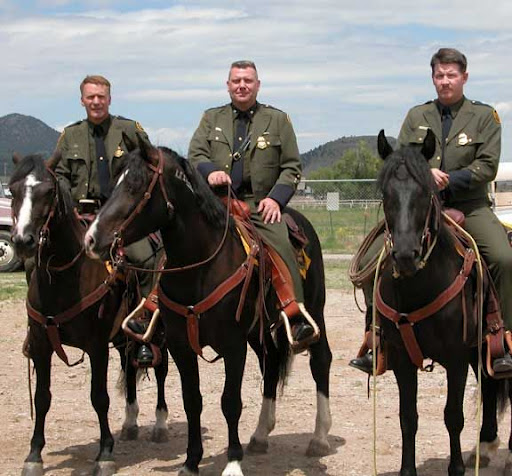
A recent opportunity to meet-and-greet mustangs serving our local border patrol presented itself. Captured wild and gentled by Colorado Corrections inmates, these bold animals appear to be perfect for their endeavors. Who taught who more–horse or inmate–before being integrated into the fold of this rugged Border Patrol station poses an inspired question. Surefooted, brawny, intelligent, they’re still enough mustang to stand against grounded cougar or foul malefactor and even stomp a rattler mid-strike. In other words, they retain their horsey essence–their wild being. For that we can thank the humans who chose to shape rather than break. Both wrangler and riders recognized the importance of maintaining their mustang’s nature even as they partnered with them for the rugged terrain in which we live. This is not a trivial matter, since each depends upon the other for life.


As when confronted the extermination of wild mustangs during my child- and young adulthood in Nevada, when reading accounts of stories, both long and short, that have been through a purported gazillion editing cycles, a part of me recoils. Another part longs to read the story, which is often what happens. Here’s my take.

Some stories survive the process of editing to become better, while others wither from the writer’s imposition of will. The latter lose their spark. Those of you who write with equal parts persistence, joy and heartbreak know what this means. On of my BGFs met the heartbreak of this headlong. She took an award-winning Scottish historical romance, then proceeded to break its spirit in hopes of crafting a bestseller. She was young in the art of the edit then and has since cultivated a more deft hand. Stories from short to novel to series in length have met the same fate. Obviously, these have been published, but they’ve been edited to the point of schlock. Schlock for me means that after reading the story, often with vast tracts of skimming, it will never ever be a keeper on my limited shelf space. Instead, it will go back to library or be found in a Friends of the Library sale. Often that author will never again grace the endless list of books I want to and do read.
Then there are the keepers. My friend Susan Wiggs wrote one that brought out the clichéd response in me–I laughed, I cried, I rooted for the protagonist and threw virtual rotten tomatoes at the antagonist. This was her novel JUST BREATHE. I felt the same about George R. R. Martin’s first few novels of his SONG OF ICE AND FIRE series, which since has shifted from fantasy masterwork to perhaps simply lost and unfinished. Sigh. Another friend and writer Anjali Banerjee writes young adult novels with a beating heart–stories that deal with ISSUES, yet remain true to story. Her first was LOOKING FOR BAPU and her latest SEAGLASS SUMMER. She edits, bends, spindles and mutilates herself over the process, which as her friend I wish she’d simply trust, but ends with these beautiful stories with essence intact.
 
Which brings me to my stories. Two have been beautifully published on a small scale, found a tiny, but growing readership, and continue to haunt me. For you see, Susan and Anjali have become well-published authors with a vast readership. Sigh–again. Granted, an infinitesimal distribution and zero public relations combined with living in a sparsely populated county with one struggling indie bookstore has been problematic. However, if my stories had sold to a large publishing house, would that have made a difference?
 
Perhaps. WILDFIRE and CALLING DOWN THE WIND, award-winners that they are, might have reached a wider audience, found more of those who love them, then been touted to their friends. I’ve done the same for stories I love. Yet here’s the problem. Four, possibly five of my novels loosely fit into either what’s called contemporary fantasy, magic realism, speculative fiction or urban fantasy, although really four of the five are actually rural or ex-urban fantasy. Large publishers refuse to fully embrace any of these categories. Just look at the well-established Alice Hoffman’s lovely novels, that bounce from literary to fantasy dependent on the bookstore or marketer. Of course, there is my homeless high fantasy trilogy that’s too big to take on with an ‘untried’ writer. Why can’t too big to fail work in this case? Sigh.
 
But I stray into rant and really, here’s the gist. My editing, like my dance, taps into the feral side. No, I’m not talking lizard brain, but the part of me that disdains being overly civilized. As an editor, I’m ruthless about craft, but mostly true to self when it comes to essence. How else could I have worked in male-dominated fields without losing my edge species element that takes ultimate joy in raqs beladi? This side mourned the loss of dogness in my retired runner greyts, then slowly and surely brought them back into touch with their essential dog nature. This part of me revels in my tuxedo cat’s inability to be wholly tamed.
 
This landscape in which we live embraces the wild as much as my writing. Yes, I grow annual vegetable and fruit by the square foot, but only in response to predatory deer who would leave me nothing. Elsewhere, it’s drought- and deer-resistant plantings that follow the curves of the land and find homes where they’re most likely to take root and thrive. Drip system all the way…
 
So why try to form story into cubes that fit the perfect square systems that our current publishing world clasps to their collective chest in a death grip, which indeed may turn out to be the death of them? I can count on one hand the books I’ve purchased as keepers in the last year. This from a voracious and careless reader.
 
Thus my conundrum. From the onset of writing a draft to publishing, where do we draw the line at editing for publication? Well, my answer changes dependent upon the compelling inner essence of each story. For now, only the beating heart, the coursing blood, the heightened sense of story lures me to the keyboard. I’ll keep you posted on how that goes and hope you’ll share your insights with me. Sigh.

My Winter ‘Vacation’ by Janine M. Donoho

Having been absent from BlogWorld for over two months, it’s time to ‘fess up. Not hard to do when your arm’s still in a sling for part of each day. You see, on December 29th, I went in for shoulder surgery. Of course, before that came the amazing, standing-room-only NIGHT AT THE CASBAH on the 19th. So December was seriously compromised by actually participating in life versus writing while thinking about it. Thank goodness for anti-inflammatories.

About the shoulder… No, the injury didn’t occur because of dance or during any of my usual actions, although I suppose gardening was peripherally involved. Last March, yes, March 2009, I was admiring my tiny seedlings beneath our hoop house that adds two months to our growing season. Then what to my wondering eyes should appear… Well, around here winds start as debris. Not like Gobi or Mohave or Sahara sandstorms, but rife with sand and duff from the sagebrush steppe far below us. As often happens, the wind moved up the mountain toward us, all the while picking up speed.

So I turned to my inestimable guy and mentioned that maybe we should move the hoop house, which is covered with heavy mil plastic, before the wind arrived and lofted it like a parachute. He was busy doing other things and would most certainly help me soon–very soon. By then the wind hit our level–about 3000 feet–and by the movement of Ponderosa limbs and needles, it looked to be about 30-40 mph. Again, I asked the guy for some help moving the hoop house off the raised garden. He waved that wave that says, “I’ll be there–soon.”

By the time he joined me, tree and shrub action proclaimed gusts of 60-70 mph. The hoop house slid across the brick top of the garden. I considered throwing myself on the top in a Kitty Hawk-type flight scenario. Instead, the guy hoisted one end and I the other. Then we began to move toward southerly leeward side of the house. What happened between there and the garden was why I needed shoulder surgery in December.

The wind gusted, caught the hoop house and lofted it much more gracefully than the Wright brothers’ contraption. In a fit of ridiculous arrogance, I tried to hold on to the frame. That’s when my supraspinatus tore away from my rotator cuff in a wrenching and high torque move. Ouch! From my mouth flew Bad Words, also wrenched away by the wind.

Supraspinatus sounds like a fabulous new salad ingredient, doesn’t it? High on antioxidants and other magical properties. It’s actually the muscle connecting the scapula to the rotator cuff. Mine refused to reattach on its own. Thus, my rotator cuff now sports a snazzy piton like screw and mountaineering style stitches to hold it in place. Ouch. The geek in me loves this stuff.

So I’m on the mend with stories bubbling from my subconscious in a lifting magma. As Arnold said, “I’ll be back”–most likely in time to begin my new spring garden. Yes, with hoop houses. Ah, hope springs eternal.

Previous Older Entries Next Newer Entries

Soundings, Water Elemental

LaunchFebruary 27, 2015
The big day is here.

Newsletter signup

Join in and receive a FREE short story as my gift to you. Exclusive promos, book deals and contests available only to subscribers.